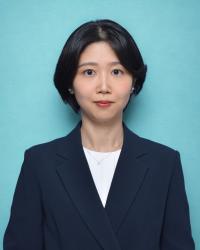
I am a PhD candidate in Economics at the University of Washington.
In summer 2026, I was a dissertation fellow at the San Francisco Fed and the St. Louis Fed; in summer 2024, I was a research intern at the IMF.
Job Market Paper
Abstract: Unrealized capital gains constitute a large share of wealth at the top of the U.S. wealth distribution and are concentrated in privately held businesses, yet they remain untaxed under the current realization-based capital gains tax system. Motivated by recent proposals to tax unrealized capital gains, this paper studies the welfare consequences of accrual-based (mark-to-market) taxation using a quantitative general equilibrium model of entrepreneurship and business sales. I find that accrual-based taxation applied to all households reduces private business production by 8%, aggregate output by 5%, and consumption-equivalent welfare by 3%, as reduced entrepreneurial entry outweighs the benefits of greater business turnover. In contrast, applying accrual-based taxation only to very wealthy households can reduce inequality and generate welfare gains of up to 1%. Targeting wealthy households, who are more likely to be incumbent business owners, limits entry deterrence, while reduced capital accumulation lowers equilibrium wages and encourages entrepreneurial entry among less wealthy households.
Award: Grover & Creta Ensley Fellowship, University of Washington (2026)
Presented at
Work in Progress
Reassessing Japan’s Fiscal Health
with Ellen McGrattan and Adrian Peralta-Alva
Presented at CEBRA Annual Meeting (2025)
Draft available upon request
Abstract
Japan faces considerable fiscal challenges due to rapid population aging. A large body of literature argues that high consumption tax rates or other significant policy changes will be required to stabilize public finances and maintain retirement, health, and long-term care systems. However, all existing quantitative studies ignore the role of intangible capital, thereby understating Japan’s true wealth base and overstating the necessary tax burden. This paper re-examines the fiscal issue by incorporating newly compiled data on Japan’s intangible investments into a dynamic overlapping generations model. We find that the consumption tax rate required to finance increased transfers for the elderly is approximately 6 percentage points lower when accounting for intangible capital, as the enhanced capital stock boosts production and broadens the tax base. Neglecting intangible capital thus significantly overstates Japan’s fiscal challenge.
Intangible Investment in Japan: A Comparison with the United States
Presented at the IMF Research Department (2024)
Draft available upon request
Abstract
GDP measures do not incorporate all intangible investment undertaken by firms, although the importance of intangible assets has been increasingly recognized. To provide a more comprehensive picture of macroeconomic conditions, this paper measures intangible investment in Japan, including additional intangible assets that are currently under discussion for inclusion in national accounts. The findings show that intangible investment in Japan is more than twice as large as reported in current national accounts statistics, and that its ratio to GDP is increasing and exceeds that of the United States. Incorporating these additional intangible assets has significant implications for macroeconomic measurement. First, Japan’s five-year GDP growth rate is estimated to increase by approximately 1 percentage point relative to the current measure, while the corresponding estimate for the United States remains largely unchanged. In addition, the impact on GDP varies substantially across industries. Finally, the estimated labor share decreases by about 4 percentage points in both countries.
Markups and Inequality in Intangible Economy
(In Progress)
Teaching
- Steven Langton Teaching Award, University of Washington (2025)
- Instructor, PhD Macroeconomics Math Camp (Summer 2023, 2024)
- Teaching Assistant, PhD Macroeconomic Analysis I and II (ECON 502, 503) (2023–2025)
- Teaching Assistant, Introduction to Macroeconomics (ECON 201) (2022–2025, five quarters)
Experience
- Research Intern, International Monetary Fund (June–August 2024)
- Research Visitor, University of Minnesota (March–May 2024)
- Visiting Researcher, Keio University (June–August 2023)
- Research Assistant, QuantEcon (2020–2021)
Education
- PhD in Economics, University of Washington (expected 2027)
- Master of Economics, Australian National University (2021, with commendation)
- BA in Economics, Keio University (2016)
Programming
Python, JAX, MATLAB, R, Stata, Fortran